AO-Xing Days 9 & 10: Continuous Cruising

So this is day 10 of what seems to become a 15 day journey across the Atlantic Ocean. We are two third through and there is still the long stretch of 700 nautical miles to go. It is almost as much as from Tenerife to Cape Verde. And guess what, I‘m not the only one who wishes that this could go on like that for a bit longer!

Well, let’s check this again after another three days. The sea rolls the boat quite a bit at times. So we even couldn’t think about the classical mid Atlantic swim. Glad we had our swimming and plunging a few days earlier when the winds were low.

One of the great things on board is that everybody enjoys a sweet water shower and hair wash every second day. The silky dry skin feeling would last for a couple of hours, before the salty air would take over again until the next shower.

There are two equally sized water tanks aboard Yuana. The upper tank is full and closed as a drinking water reserve during a long passage. This is a safety measure, should the water in the lower tank go bad, for example due to a malfunction of the water maker.

The lower tank is refilled with the water maker every second or third day. A water maker processes sea water into super clean demineralized water. We even use a mineralization and hardener station to enrich this water for drinking and easy rinsing of soap.

That water from the tank goes again through a coal filter. It removes any smells from water we would have taken in from marinas. So we have always perfectly clean and nice tasting drinking water available. The six of us consume up to 100 liters of fresh water per day for drinking and cooking, dishes, washing and body hygiene.

The water maker is the largest energy consumer aboard. To get 55 liters of fresh water per hour requires a high pressure water pump working at 56 bar. The electric motor for that pump consumes 38 Amps at 12V. That electric power is generated with the Diesel engine.

Conclusion is that we run quite a complicated process to turn oil into water. The one aboard who understands the whole system appreciates the showers even more;-).

Nautical miles during the crossing:
Day 10: 140 nm
Day 9: 147 nm
Atlantiküberquerung Tage 7 & 8: Bergfest!

Es ist der 1. Dezember. Gestern war ergo der letzte Tag eines Monats und das heisst für uns, dass wir den Rest unserer monatlichen Satellitentelefon-Minuten aufbrauchen. So haben wir fast zwei Stunden mit Familie, Freunden und Schulfreunden in der Schweiz und in Schweden telefoniert.

Stellt euch vor, in der Schweiz war es abends schon dunkel und auch kalt, in Schweden sowieso. Von Schnee und Weihnachtsmärkten haben sie erzählt!

Weil wir seit dem Juli fast täglich die Sonnencreme in Händen haben (ausser in England natürlich), liegt uns das dezemberliche Nordeuropawetter ziemlich fern. Allerdings muss ich gestehen, dass ich bereits im Oktober in einem Aldi auf Lanzarote Eliesenlebkuchen gekauft hatte. Für den Christstollen hingegen schien es mir damals doch noch etwas zu früh zu sein.

Ja, wir sind gerade ziemlich mittendrin und mittendurch den Atlantik. Kleine Feiern sind willkommene Abwechslung im Seealltag. Zum Glück gibt es viel zu feiern. Mit dem 7. Reisetag seit den Kapverden ist logischerweise die erste Woche voll. Für die Kinder hat sich diese Zeit angeblich wie zwei oder drei Tage angefühlt. Für die Erwachsenen waren es immerhin fünf gefühlte Reisetage. Das ist doch ein gutes Zeichen! Wir verdanken dies der spassigen Crew, den leichten Wetterbedingungen und nicht zuletzt unserer komfortablen Lady Yuana!

Der achte Tag bringt nun das Bergfest! In beide Richtungen sind wir runde 1900 Kilometer vom Land entfernt. Das ist doch mal etwas Ungewöhnliches. Der geographisch nächstmögliche Landfall wäre in Französisch Guyana, dort wo die Franzosen ihren Weltraumbahnhof haben, EU-Gebiet also, no Problems.

Französisch Guyana oder auch die frühere holländische Kolonie Surinam sind für uns Ausweichziele, sollten wir aus irgendwelchen Gründen dringlich An Land gehen müssen. Im Moment gibt es allerdings keinen Grund, nicht direkt nach Barbados zu fahren. Alle sind fit, die Wetteraussichten sind nahezu perfekt, und alle Systeme an Bord funktionieren einwandfrei. Wir können also munter in die zweite Hälfte unserer ersten Atlantiküberquerung ziehen.

Normalerweise sind wir während den Passagen ein dry boat, wie die Engländer zu sagen pflegten, welche wir letzte Nacht abgehängt haben. Das heisst, dass wir unterwegs keinen Alkohol konsumieren.
Dies ist eine reine Vorsichtsmassnahme. Sollte sich ein Unglücksfall ereignen, so ist man im Kopf stets auf der Höhe, um sofort den notwendigen Extra-Effort leisten zu können. Mit etwas schwedischem Charme hat sich diese Regel nun kurzzeitig aussetzen lassen, und so gibt es zum Bergfest ein Glas Champagner. Kulinarisch gehen wir mit einem Avocadobrötchen, einer Schale Reis-Linsen-Mais-Gurken-Karotten-Salat durch den Tag, und Abends stehen frische Ravioli auf dem Menü;-).

Dass wir nun die halbe Distanz hinter uns haben heisst nicht, dass die zweite Hälfte der Reise nochmals acht Tage dauern wird. Erstens haben wir nun viel bessere Winde als am Anfang, und zweitens müssen wir wahrscheinlich keine windbedingten Umwege mehr in Kauf nehmen. Karibik, wir kommen!

Etmal Tag 8: 145 Seemeilen
Etmal Tag 7: 125 Seemeilen

Passing the Half Way Point!

Friday December 1st at 11:22 UTC, Yuana and it’s crew pass the half way point on the way from Mindelo, Cape Verde to Bridgetown, Barbados. We cheer with bubbles and enjoy home made guacamole bruschetta, kids opting for Fanta and jelly bears. Everybody is enjoying that particular moment on the sea and in the sun. There are now only 1010 nautical miles to Barbados and we are looking forward to the next days out here ;-).

Cheers to our Friends at home!

AO-Xing Days 5 & 6: Finally Trade Winds

There we go with the trade winds. True wind speeds are above 20 knows at times. Sails are full and Yuana rushes down the winds and down the waves. Our 24-hour average traveling speed is now around or above 6 knots, as it is supposed to be. The sea is relatively flat and comfortable. Somewhat unexpectedly, we can even do our school program for the kids.

The boats which went for the Southern route make a fantastic progress these days. One catamaran even did more than 200 nautical miles within 24 hours. By its design and dimensions, Yuana cannot be that fast. We would have to reef the sails in the those winds and the sea state would certainly be not be better for us there. So we are still more than happy with the route we have chosen and glad that we passed some other boats in our vicinity.

Some who study our track might wonder why we zic-zac towards Barbados at times, whereas other ships go as the crow flies? With the sails available the boat makes best speed with a wind angle of 120-150 degrees. Heading straight downwind (which would be 180 degrees) makes the boat slower. The zic-zac however makes the route longer. So the trick is to understand how much extra speed the boat has to make so that the deviation still pays?

To find the trade-off between shorter distance and extra speed, we use the dimension ‘Velocity Made Good’ (VMG) on our displays. The VMG is the speed vector towards the destination. It decreases the farther we point away from the target waypoint, except if the boat speed increases more by doing the same. Yes, a bit complicated.

After a day without seeing any buddy boats, British ‘Krabat’ and Swedish ‘Rubicon’ appear on our screen. Our directions seem to cross. Finally we pass ‘Rubicon’ in a distance of just 0.2 nautical miles only, what a coincidence! Although if I like the idea of being alone very much, it is good to know that some buddies from the same Ralley around us. We chat for half an hour on the radio. One can find all kinds of topics to exchange. There are always news about well being, fixing things, weather or fishing. Fishing actually can be pretty expensive if the hooked fish would disappear with the expensive lures all the time.

Yes, we made the same experience: we are on one of the biggest fishing lakes in the world and run short of lures now, what a pity. So we started to create our own lures. It doesn’t require more that a hook, a couple of colorful woolen threads and a bit of fantasy to create own lures. We also found that the fish would bite better if some meat is attached to the hook.

Once we catch a fish of reasonable size, we bring it to deck and spray a little bit of alcohol into his gills. It is then quiet and can be ‚sent beyond’ and filleted quite easily. Joe tried the technique to fillet the fish without opening it and removing the intestines first. This goes much quicker and with less of a mess. By the way, the beautiful 75cm Wahoo we caught on day 6 gave a very nice lunch for all of us.

So here we are, doing well, feeling well, starting to discuss how we shall celebrate the next Half Way Party;-)! There is the big blue Atlantic Ocean all around us. We hear our own wake astern. Yuana gives us a safe and comfortable home.

Nautical miles during the crossing:
Day 6: 144nm
Day 5: 149nm

Atlantiküberquerung Tage 3&4: Immer noch flau.

Vom Passatwind ist nach wie vor nichts in Sicht. Schon seit vier Tagen läuft der Motor fast ununterbrochen. Mit niedertourig gehaltenem Motor und aufgezogenen Segeln kommen wir auf etwa 5 Knoten Fahrt. Die einzigen Stopps sind eine kurze Windstunde und zwei Badepausen im offenen Meer. Über Funk hören wir von den anderen Schiffen, was für Riesenfische diese schon gefangen oder gesichtet haben. Eine Crew ist sich sicher, dass sie Haie gesehen haben. Wir baden mittags wenn die meisten Fische nicht fressen, und lassen die Kinder nicht alleine ins Wasser. Wäre ein einzelnes Kind im Wasser für den Hai nicht ein einfacheres Ziel als eine Gruppe von Personen? Ebenso schwimmen wir nicht von Yuana weg.

Diesel ist Trumpf: wer mehr hat kann länger, und unser Schiff hat zwei sehr grosse Tanks. Das hilft uns gut, durch diese hartnäckige Flaute zu kommen. Die Wogen sind unglaublich lang. Von Wellen kann man hier nicht mehr sprechen. Es sing buchstäblich wandernde Wasserhügel, welche über das weite Meer reisen. Je nach Windhauch und Himmelsreflektionen hat jeder dieser Wasserberge einen anderen Blauton. Wir nehmen an, dass sich die fliegenden Fische erst wieder zeigen, wenn es wieder Wellen mit einem etwas steileren Winkel haben. Erstaunt sind wir über die vielen Vögel hier draussen. Teilweise sieht man mehrere Vögel pro Stunde. Meist fliegen sie dicht über dem Wasser. Wahrscheinlich fressen sie kleine Mücken.

Am Abend des dritten Tages beissen plötzlich wieder Goldmakrelen an. Die erste ist zu klein. Die zweite und dritte sind 45cm und 60cm lang und geben zusammen ein feines Abendessen ab. Einen grösseren Fisch verlieren wir leider wieder von der Angel. Unsere Tochter muss weinen, weil wir die Fische töten. Abends beschliessen wir gemeinsam, dass wir ab sofort nur noch jeden zweiten Tag Fischen werden. Das passt nun für alle.

Mittags erhalten wir jeweils per E-Mail die Positionen der anderen Schiffe. Vorläufig scheint es, als hätten wir uns eine gute Routenstrategie zurechtgelegt. Die Schiffe, welche anfänglich weit südlich den Wind gesucht haben, liegen mehrheitlich hinter uns. Sie haben in Hoffnung auf bessere Winde teilweise beträchtliche Umwege in Kauf genommen. Es wird sich weisen müssen, ob das lohnt. Wir selbst wollen segelnd eine Reisegeschwindigkeit von 6-7 Knoten erreichen, und brauchen daher gar nicht in den besten Windgürtel hinunterzufahren. Abends laden wir jeweils die neuesten Windprognosen herunter und studieren, ob unsere Strategie zukunftsfähig ist. Gespannt warten wir auf die nächsten Positionsdaten. Unseren aktuellen Kursverlauf kann man auf dem Link zu CornellSailing sehen, welcher auf der Homepage unter dem Menupunkt We abgelegt ist.

Die Nächte sind dunkel. Der Neumond bringt kaum Licht in die Nacht.
Etwa um Mitternacht verschwindet die dunkelgelbe Sichel dort, wo einige Stunden zuvor die Sonne untergegangen war. Orion steht wie immer. Sternschnuppen flirren durch die Sommernacht.

Etmal Tag 4: 125 Seemeilen
Etmal Tag 3: 127 Seemeilen

Atlantic Ocean Crossing Days 1&2

The first two days are over and we are still waiting for wind. There was some wind around the Cape Verde Islands, and later occasionally every here and there. We reached 7 knots of boat speed during last night. This is generally not overwhelming but still counts for progress if otherwise the engine is consuming limited diesel.

Diesel was really cheap in the Cape Verdes, costing something like 0.90 Euros per liter. We stocked 415 liters. That would keep us going for another 4.5 days in same conditions. But hey, we are here for sailing. Usually there should be plenty of trade winds in our latitude this time of the year, but a big storm system which passed far north of us has stopped every wind where we are. Yes, this might also be part of the climate change which very experienced sailors such as Jimmy Cornell have noticed during the last decade already. Luckily, our Hallberg-Rassy came with two big tanks and so we can carry more fuel than many others in our fleet.

Our fleet is 23 boats and most of the have left Mindelo on Thursday within two hours. The field stretched quite rapidly. Some went for the shortest way towards Barbados hoping that winds would pick up after two days. Others intended to go two hundred miles South first to get into stable trades. After doing our own weather considerations we opted for the Swiss way which is to choose a strategy which was finally in between the ‘extreme’ positions.

By doing so, we saw the lights of ten other yachts in the beginning of the first night, with three lights remaining at the end of same night. Now when being two days into the crossing, we have also lost the last boat which was so far displayed on our electronic plotter screen.

Unfortunately we deviated from our routing strategy already on the first evening. We were then convinced that the extra miles for going Southwest would not be worth the diesel we consume. 24 hours later and with the newest weather data available we re-adjusted our course from 270 to 240 degrees, since wind seems not to pick up here for the next three days.

Anyway, the distance to destination was 2030 nm when we started. Since then, we have seen 2000, 1900, 1800 nautical miles going by. Guess what? The common feeling is that these miles go down too quickly. Let’s see what we will say next week.

The crew works very well together and we have had two lovely days. The calm weather even allowed to stop the boat once for one hour to go swimming and cooling down around the boat, followed by much appreciated shower. Air temperature is 30.4 degrees as water is 28.1 degrees.

Even fish get lazy with the calm and warm sea. Fishing success so far is limited to three small Mahi-Mahi’s, approximately 40 cm long. We made photos of each one to be documented for the fishing contest amongst the fleet, but let the fish go because each one was were not really big enough to give a good meal. So we started to create our own lures which look now bigger than the original ones, hoping that bigger fish would bite.

Jeanette and Joachim furled our genoa out again minutes ago. The 3.8 knots of true wind would give us another 0.5 knot of boat speed, now being back to 5 knots boat speed over ground. With this configuration we will continue motoring and look forward for finally reaching the trades on Sunday afternoon.

Nautical miles during the crossing:
Day 2: 125nm
Day 1: 115nm

Neue Crew!

Nun ist unsere Mannschaft vollständig! Markus’ Bruder Joachim ist vor einigen Tagen mit dem Flieger in Mindelo eingetroffen, um mit uns über den Atlantik zu segeln. Joachim hat bereits einige Segelreisen hinter sich. Sein spektakulärster Törn ging ab Argentinien (Ushuaia) auf die Antarktische Halbinsel, und wieder zurück. Das war ein Törn von insgesamt vier Wochen mit Windgeschwindigkeiten bis zu 65 Knoten und einer mittleren Wellenhöhe von bis zu 6 Metern. Unser kombiniertes Segelwissen wird somit um ein wichtiges Erfahrungsgebiet erweitert!

Mit vier Erwachsenen, zwei Kindern und all dem vielen Proviant an Bord ist unsere Yuana nun schwer beladen, und das Platzangebot weiter eingeschränkt. Das nehmen wir bewusst in Kauf.

Zurück zu den Vorteilen: der praktischste Aspekt der zusätzlichen Person ist, dass wir die Nachtwachen auf mehr Leute verteilen können. Das wird jedem viele zusätzliche Stunden zum Relaxen geben. Besonders bezahlt macht sich das, falls einmal schweres Wetter aufziehen sollte, und nicht mehr alle fit für die Bootsführung sind.

Gemäss dem Zweiwochen-Seewetterbericht werden wir jedoch kein Schwerwetter haben. Es wäre auch recht ungewöhnlich für diese Jahreszeit auf dieser Route. Einigermassen zuverlässig wissen wir, dass die ersten drei Tage sehr wenig Wind bringen werden. So fahren wir nun Kurs Südwest, bis wir auf die aktuell sehr weit südlich laufenden Passatwinde treffen.

Ahoi Joe! Super, dass du an Bord bist!

By the way: nur noch 2005 Seemeilen bis Barbados.

Cape Verde Islands

When we took first sight of the Cape Verde Islands, it was a thin line of sparsely grouped lights of the islands Sao Antao and Sao Vicente, half way through the night. Early morning light unveiled misty mountains, steep, not too high, somehow magic. They were just there, as ever since, certainly not waiting for us.

After another couple of hours we arrived and set into the harbor, first to the fuel dock, then into the well managed Marina, manager from Northern Europe. All staff greeted us with ‘Welcome to Cape Verde!’. It was lovely to be welcomed into a new country after several days on sea.

Now we had our feet on African soil, this time also politically African. We found a clean town with a couple of ATM’s around the corner and a the mobile communications company selling 3G SIM cards for 2.50 Euro, 3.5 Gigabytes included. So far so good!

The standard of living is definitely a different one here compared to what we are known from Northern Europe. This was a good exercise for our kids as well. Next to seeing what’s going on in the streets, one can easily spot that buying things goes with a different logic. Samples? As most people have no fridge at home, no fresh butter or yoghurt is available in the shops.
Or: As people want to consume fancy products but have only little money, soft drinks are sold in very small bottles, and cigarettes can be bought by the single piece.

A local helped us with finding fresh bread on a Sunday morning. We were glad when he offered to show us the bakery. Finally it was a 1.5km run to the other side of Mindelo and the bread was not really great. I offered to buy some bread for him as well, but he preferred to receive a large box of dried milk powder for his baby twins at a price he couldn’t have afforded. We went into further social engagements. Expecting some gratitude from the receivers usually turned out to be wrong. It may be like that.

Being asked whether independence from Portugal was a good thing, the milk powder man says that he sees economic disadvantages in the now globalized world. But he would also mention that his grandfather still likes the independence since locals felt treated incorrectly those days. Today, the relation between Cape Verde and Portugal seems to be quite friendly.

Low standard of living means low cost for basic things of daily live. This attracted a good dozen of old sailing boats and crews who dropped anchors around the Marina. The boat names tell about dreams which have run out of fuel, and those boats lousy poor appearance tell about the sailors who didn’t manage to find the way back into Northern civilization.

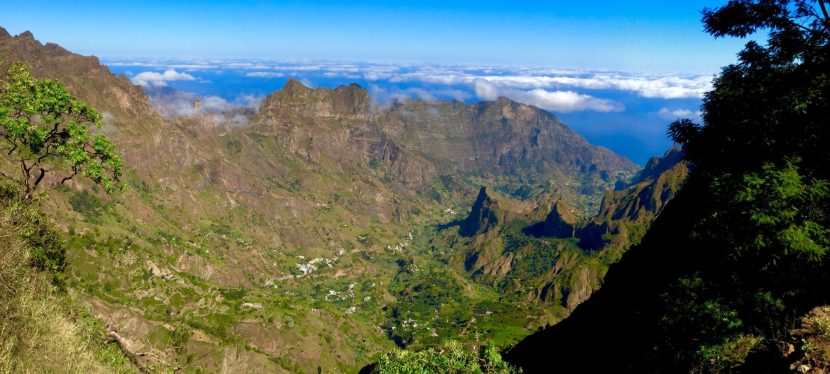
One of our better day trips so far happened in the Cape Verde Islands. We used the ferry to go to Sao Vicente island. We were rewarded with absolutely stunning views, see picture. As much as the Eastern side of the island is dry and brown, the Western side is humid and green. There are sugar canes grown as much as avocados, grape fruits, or papayas.

Back in Mindelo, we find the perhaps safest playground in the world. An armed watchmen would guard the playing children. His job description unfortunately also includes to tell the kids continuously what not to do. It was not appreciated when kids were running too fast, hanging head over on a wooden beam, or if only two kids would sit on a swing which was designed for four kids.

Now we are done with all preparations for crossing the Atlantic Ocean. Yuana is ready again and lots of fruits and veggies are washed and individually wrapped in paper towels. That’s the way how to keep them fresh for a long time on sea. Feelings are like ‘When can we finally go?’. All four weather models predict light winds in right direction all the way to Barbados. So at least the first couple of days should be an easy go. Markus’ brother Joe is now also on board and we are ready for departure tomorrow Thursday November 23rd.

Good bye, Africa!

Young visitors

Blue water cruisers by definition visit many places all around the globe. Sometimes we find ourselves in a place we would attribute with the word paradise. This may be our impression when we spot the most beautiful beaches, rock formations or palm trees. But those palm trees or the roof of the hut behind the beach may cover poverty and anything else than paradise. And as often in such situations, the weakest are the ones which starve the most.

So it would be nothing else but human to meet these people and try to give them some comfort. This is many times easier said than done. Cornell Sailing offered us the opportunity to cover a bit of our responsibility by bringing us together with the kids from the local SOS Children Village. Ahead of that event, the crews from our rally donated money to buy a trumpet, an e-piano and an accordion for the local kids music group.

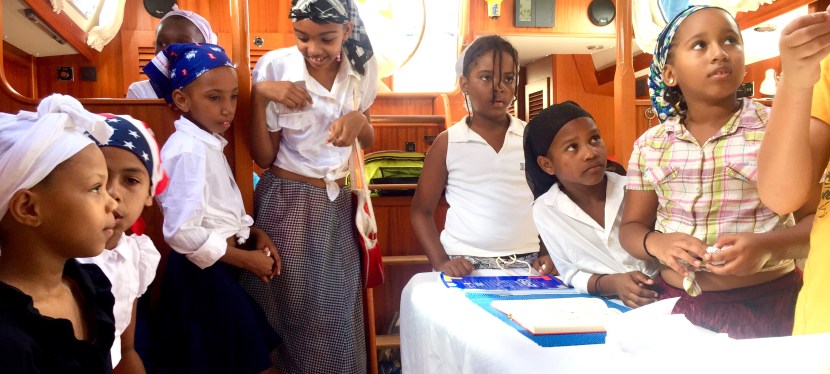
When Saturday came, drums on the pontoon would announce a crowd of girls and boys from that SOS Children’s village. They were given the possibility to meet us on the boats. We welcomed four of them aboard Yuana. As soon as I indicated that four is a good number to start with, one girl on deck and on one left on the pontoon started to cry and calling each other to come. They seemed to be sisters who were very much afraid from being separated from each other. Who knows that they had to experience earlier in their lives? So we weren’t hesitating to have the sister on board as well.

Inside the boat, our son would invite them to play with the paper roller coaster he developed over the past days. He would give them the balls made of crumpled aluminum foil. Everybody enjoyed playing the game. The daughter would take them into the sleeping room and suddenly now eight kids were sitting on the beds, wondering how soft a bed can be. We gave some finger rings and necklaces as a present. Back they went with a warm souled woman they would call ‘Mama’. Together we went to the big gathering for some culinary refreshments and local music. This was also there the music instruments were handed over.

Cornell Sailing made it a tradition for many years that the sailors of their Rallies can contribute directly to local aid projects. Taking into account the number of rallies throughout the year and contributors year after year, one would expect that this engagement makes a difference for the receivers. We saw many happy children’s eyes.

Tag 5 & 6 – Fliegende Fische

Als Kind dachte ich, dass fliegende Fische ins Reich von Peter Pan und 1001 Nacht gehören. Die Kombination von Fliegen und Schwimmen wollte einfach nicht so recht zusammenpassen. Kann sich jemand ernsthaft vorstellen, dass entweder ein U-Boot fliegen oder ein Flugzeug nach Belieben abtauchen kann? Das waren so meine Gedanken als kleiner Knirps, während die anderen Jungs sich auf dem Gras mit viel Körpereinsatz um einen Ball gestritten hatten, haha.

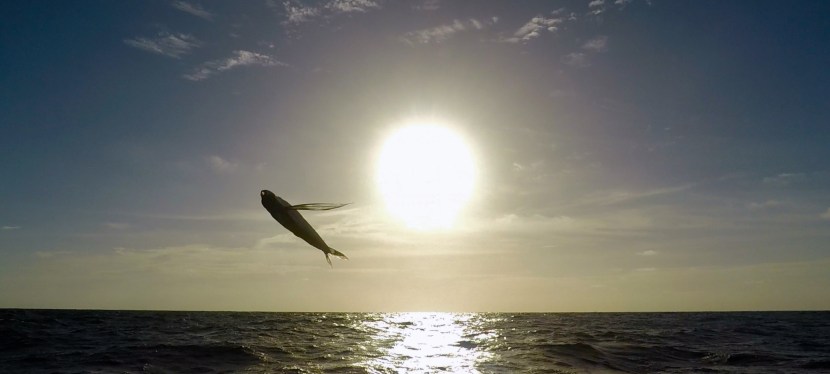
Nun habe ich die fliegenden Fische mit eigenen Augen gesehen, und beobachte folgendes: Es ist nicht etwa so, dass sie aus dem Wasser springen, um nach einigen segelnd zurückgelegten Metern zurück ins Wasser zu platschen. Nein, sie fliegen aktiv, und zwar mehr als 50 Meter weit. Sie passen ihre Flugbahn den Wellen an. Sie fliegen mit geschätzten 10 Metern pro Sekunde und sind dabei über einen Meter über der Wasseroberfläche. Sie können keine engen Kurven fliegen. Um zu steuern und müssen sie sich in die Kurve legen.

Der Flug sieht schnittig und grazil aus. Würde man diese unglaublichen Tierchen mit einem kleinen Sportflugzeug à la Breitling vergleichen, so wäre eine ordentliche Nordseemöve dagegen bereits ein Airbus A380. Natürlich muss man bei diesem zugegebenermassen sonderbaren Vergleich bedenken, dass der Breitling nach einem Taucher bei aller Wendigkeit nicht mehr selber in die Luft kommt. Da die fliegenden Fische nebst der eingeschränkten Lenkfähigkeit offensichtlich nachts nicht sonderlich gut sehen können, muss man morgens jeweils eine Hand voll Kadaver vom Deck über Bord befördern.

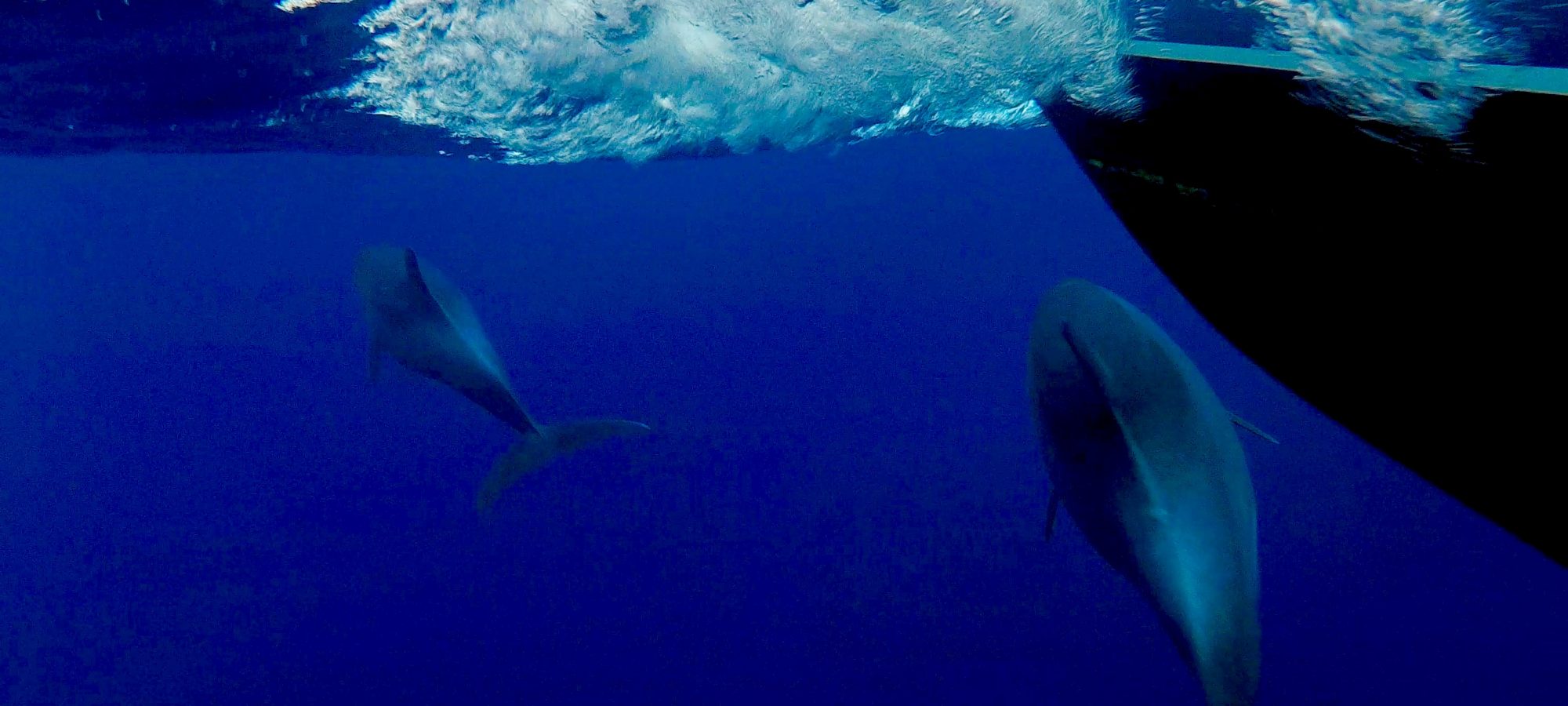
Wenn es anstatt der tausenden von fliegenden Fischen nur etwas mehr Thunfische, Goldmakrelen, Delfine und Wale gäbe! Mit dem Fischen und Fish Watching waren wir nicht besonders glücklich auf dieser Tour. Den andern Schiffen ist es auch nicht viel anders ergangen.

Dafür war schön, dass wir uns täglich um 10 Uhr über Funk mit der Crew von A Capella of Belfast unterhalten haben. Man fragt gegenseitig, wie die letzte Nacht war, wer welche Schiffe aus unserer Rally um sich herum hat, oder bespricht technische Themen. Zunächst schien mir das etwas belanglos, aber immer wieder kommt man so an brauchbare Informationen heran. Bei uns an Bord haben stets alle gespannt mitgehört, was auf dem anderen Schiff gerade läuft. Die Funkrunde hat schnell einen festen Platz im Tagesablauf eingenommen.

Besonders luxuriös fanden wir das Körpergefühl nach dem Duschen. Das Duschen selbst ist wegen der Wellen eine mühsame Angelegenheit. Daher und auch wegen dem Wasserverbrauch gönnt man sich keine tägliche Dusche. Wenn man jedoch geduscht hat und getrocknet ist, dann stellt sich ein normalerweise unerkannt flauschiges Hautgefühl ein, angeblich auch bei den weniger behaarten Frauen ;-). Das kommt wohl daher, dass endlich mal wieder die salzige Schmiere von der Haut weg ist, welche Feuchtigkeit bindet.

Nun sind wir nach exakt sechs Tagen Fahrzeit in Mindelo ankommen. Weil wir volle sechs Tage und nicht nur fünf Tage auf São V bleiben wollen, haben wir in den letzten drei flauen Nächten mit dem Diesel etwas nachgeholfen, wie einige andere auch. Seglerisch waren Yuana und wir ein ganz tolles Team. Wir freuen uns alle, dass Jeanette auch dabei ist, wenn wir am 23. November nach Barbados aufbrechen! Genauso freuen wir uns auch auf ein sechstes Crew-Mitglied, welches in den nächsten Tagen in Mindelo zu uns stossen wird.

Etmale:

6. Tag: 146nm

5. Tag: 150nm

4. Tag: 150nm

3. Tag: 148nm

2. Tag: 126nm

1. Tag: 134nm

Total:

– Santa Cruz de Tenerife nach Mindelo:854nm (1582km)

– Makkum (NL) nach Mindelo: 3265nm (6047km)